
How you stop condensation on windows depends entirely on where the moisture is sitting: on the outside it is harmless and a sign of efficient glazing, on the inside room-facing glass it is a ventilation and humidity problem you can fix yourself, and trapped between the two panes it means the sealed unit has failed and needs replacing. Use the 30-second diagnoser below to find out which one you have, then jump straight to the right fix.
Condensation diagnoser
Two quick questions, instant answer
Guidance only. A glazier can confirm a failed unit on inspection.
What causes condensation on windows
Air holds water vapour, and warm air holds far more of it than cold air. Every home adds moisture to its air constantly: cooking releases up to 3 litres a day, showers and baths another 1.5 litres, drying laundry indoors as much as 5 litres per load, and a sleeping adult breathes out around half a litre a night. All of that vapour stays invisible until the air touches a surface cold enough to push it past its dew point, the temperature at which air can no longer hold its moisture and releases it as liquid water.
Window glass is almost always the coldest surface in a room, which is why the moisture appears there first. The colder the glass and the wetter the air, the heavier the condensation. That simple mechanism explains all three types: outside condensation happens when an efficient pane stays cold overnight, inside condensation happens when indoor humidity is too high for the glass temperature, and between-pane condensation happens when a failed seal lets moist air into a cavity that should be bone dry.
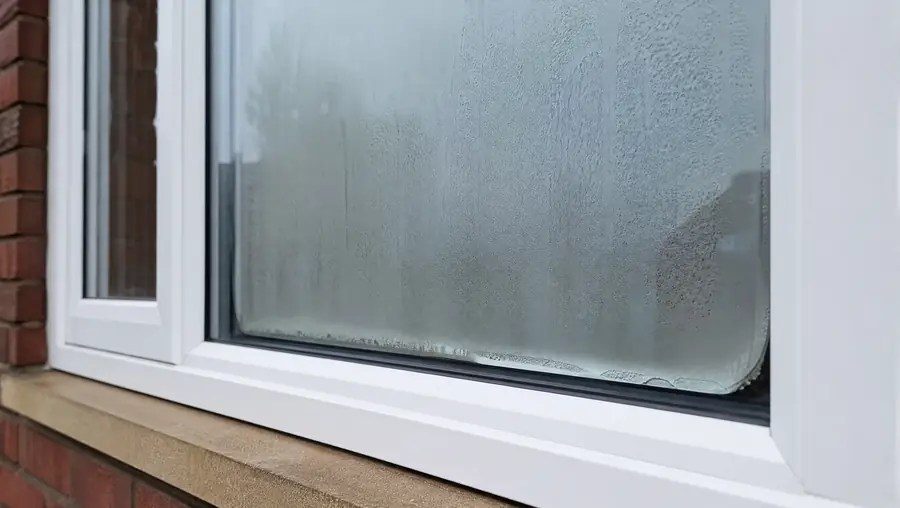
How to stop condensation on the inside of windows
Inside condensation is a battle on two fronts: put less moisture into the air, and get more of it out. These are the fixes that actually work, roughly in order of cost.
- Ventilate daily. Open windows for 10 to 15 minutes each morning to swap the moist overnight air for drier outside air. Short, sharp airing loses far less heat than leaving windows cracked all day.
- Open your trickle vents. Those small slotted vents in modern frames exist precisely for this. Keep them open year-round; the heat loss is tiny compared with the moisture they remove.
- Use extractor fans properly. Run the bathroom fan during every shower and for 15 minutes after, and the kitchen extractor whenever you cook. If a bathroom has no fan, fitting one is the single best upgrade for a damp home.
- Keep lids on pans and doors closed. Lids roughly halve cooking moisture, and closing kitchen and bathroom doors stops steam migrating to cold bedroom windows.
- Stop drying clothes on radiators. A single load pushes litres of water into your air. Dry outside, use a vented or heat-pump tumble dryer, or dry on a rack in one closed room with the window open.
- Keep humidity between 40 and 60 percent. A £10 hygrometer tells you where you stand. Above 60 percent, condensation and mould become likely on any cool surface; below 40 percent the air starts feeling uncomfortably dry.
- Run a dehumidifier in problem rooms. A compressor dehumidifier pulls litres of water a day out of the air for pennies per hour and is the fastest fix for a persistently wet room.
- Heat steadily, not in bursts. Letting the house go cold then blasting it creates cold surfaces and warm moist air, the perfect condensation recipe. A steady background temperature keeps glass and walls above the dew point.
- The overnight bedroom fix. Bedrooms fog up because two people exhale moisture all night into a cooling room. Leave the trickle vent or window slightly open, keep the door ajar, keep the room at 15 degrees or more and never dry laundry in there. If mornings are still wet, a quiet dehumidifier on a timer clears it.
- Move moisture sources off the sill. Houseplants, fish tanks and drying towels all feed the air directly next to the coldest glass in the room.
Windows misting up because they are old or failing? Homeowners with windows five years old or older can check in under 60 seconds whether a grant or funding could cover some or all of the cost of replacements. Launch the funding checker.
Condensation between double glazing panes
A double glazed unit is two panes of glass bonded around a spacer bar, with the cavity filled with dry air or argon and a desiccant in the spacer soaking up any trace of moisture. When the perimeter seal fails, usually through age, sun-baked south-facing exposure or poor original fitting, humid outside air is pumped in and out of the cavity as temperatures change. The desiccant saturates, and from then on the moisture condenses on the inside faces of the glass where you can never reach it.
This is why no amount of wiping, ventilating or dehumidifying will ever clear between-pane misting: the water is sealed inside the unit itself. A failed unit has also lost most of its insulating gas, so it leaks heat as well as looking foggy. The good news is that you rarely need a whole new window. If the frame is sound, a glazier can swap just the sealed unit: as a typical 2026 guide, that costs £80 to £180 for a small unit, £250 to £360 for a mid-sized unit and £380 to £600 for a large one, plus around £50 to £60 labour per unit. Our full misted double glazing unit cost guide breaks the prices down and covers the repair-versus-replace decision, and our double glazing repairs guide covers the other faults worth fixing at the same time.
When condensation means new windows
Replacing individual sealed units stops making sense when several units have failed, the frames are draughty or discoloured, hinges and locks are worn, or the windows are old single glazing or early double glazing with cold, inefficient glass. At that point new A-rated windows fix the between-pane misting permanently and reduce inside condensation too, because the inner pane stays several degrees warmer and modern frames include trickle vents as standard.
Before you price up a full replacement, check what help is available. Qualifying homeowners with windows five years old or older can apply for the Help 2 Buy Windows grant, and those who do not qualify can be offered partner funding that spreads the cost. The Help 2 Buy Windows grant has nothing to do with the UK government; it is funded 100% by Help 2 Buy Windows through the sale of leads to our clients. Our guide on how to qualify explains the criteria, and the 60-second funding checker gives you an instant answer.
Frequently asked questions
How do I stop condensation on windows overnight?
Open trickle vents or leave the bedroom window slightly ajar, keep the bedroom door open a crack so moist air can circulate away, and keep the room at 15 degrees or above rather than letting it go stone cold. Never dry clothes in the bedroom, and if mornings are still wet, a small dehumidifier running overnight will usually clear it completely.
Why do my windows have condensation on the inside?
Because the moisture in your indoor air is hitting glass that is colder than the air's dew point. Cooking, showering, drying laundry and even breathing add litres of water vapour to a home every day, and the glass is usually the coldest surface in the room, so that is where the vapour condenses first. It is a humidity and ventilation problem, not a fault with the glass itself.
Does condensation between the panes mean the window has failed?
Yes. Misting trapped between the two panes of glass means the sealed unit's perimeter seal has failed and moist air has leaked into the cavity. No amount of wiping, ventilation or dehumidifying will clear it. The fix is a replacement sealed unit, typically £80 to £600 plus labour in 2026 depending on size, or a new window if the frame is also tired.
Are anti-condensation sprays worth it?
Rarely. Sprays and films treat the symptom, not the cause: they make water spread into a thin sheet instead of droplets, so the glass looks clearer while the moisture is still there. The money is better spent on ventilation and humidity control, such as extractor fans, trickle vents or a dehumidifier, which remove the moisture rather than disguising it.
Will new double glazing stop condensation?
It permanently fixes condensation trapped between the panes, and it sharply reduces condensation on the room-facing glass because modern A-rated units keep the inner pane several degrees warmer, above the dew point on most days. New windows also come with trickle vents that improve background ventilation. If your home produces a lot of moisture, you still need to ventilate, but new glazing removes the cold surface it condenses on.
Is window condensation harmful?
The water on the glass is harmless, but what it feeds is not. Persistent condensation running onto frames, sills and surrounding walls encourages black mould, which can damage plaster, sealant and timber and is linked to respiratory problems, especially in children, older people and anyone with asthma. Treat regular indoor condensation as an early warning worth acting on.