
Just moved into a new home? The first improvements worth making are the ones that cut your running costs and protect the building: double glazed windows and doors, insulation, an efficient boiler or heat pump, and updated kitchens and bathrooms. This guide works through each one in a sensible order, so you can treat it as a checklist after picking up the keys.

Home improvements can be a challenge to get right, and plenty of people struggle with where to start. The trick is to find the options that work for your property and your budget, but there is broad agreement on a handful of jobs that make sense for almost every new homeowner. The best first improvements do two things at once: they add value and they make your home more energy efficient.
Install double glazed windows as one of your first home improvements
One of the first home improvements to make when you buy a property is to fit double glazed windows, for three reasons.
First, they improve your home's energy efficiency, which matters more than ever with 2026 energy prices. Second, they deal quickly with the draughts that may have set in before you moved in. Third, they look clean and fresh, and new frames update the whole appearance of the house.
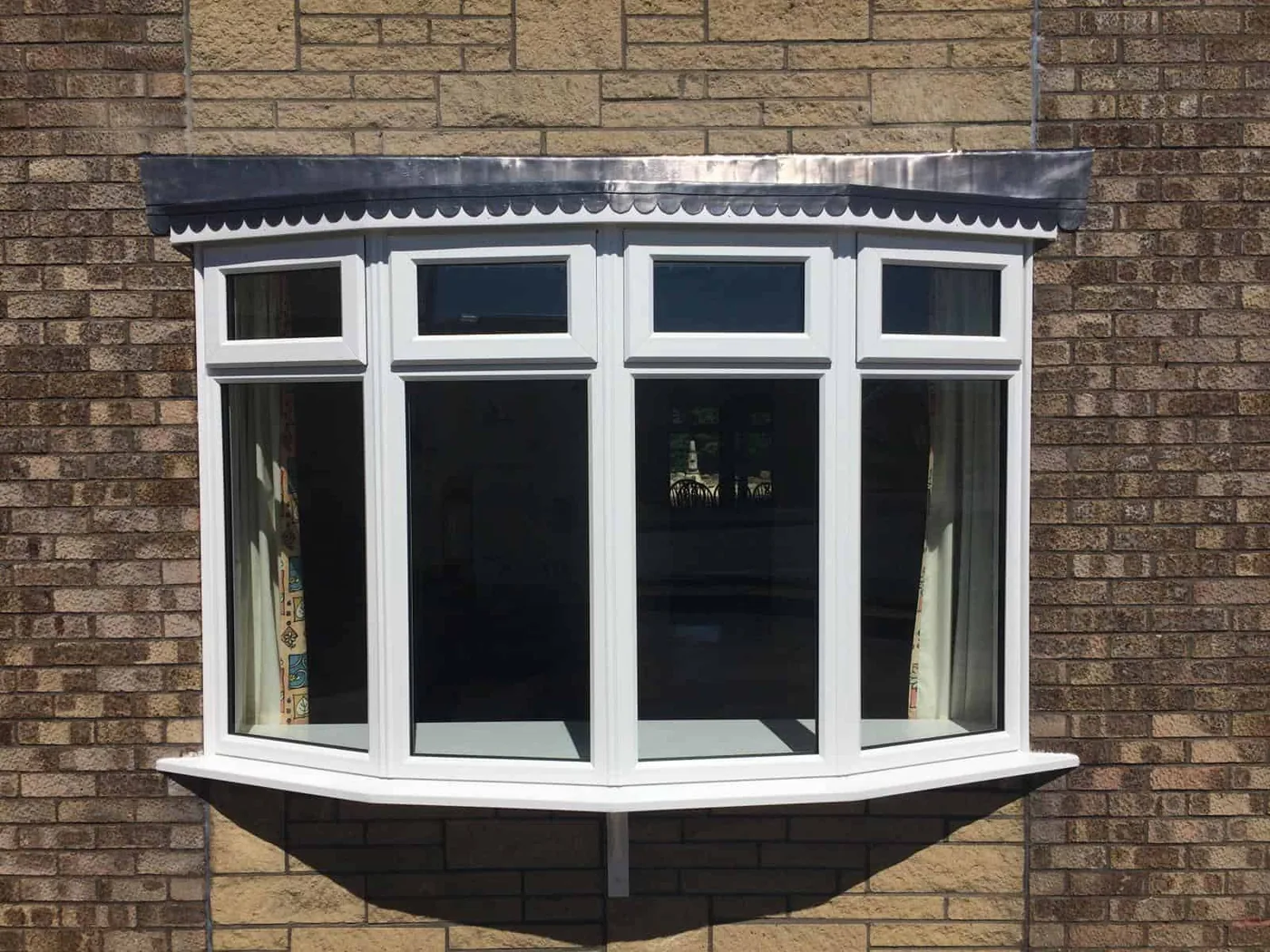
If you are weighing up what new windows involve, our guide to uPVC window costs covers typical 2026 prices, and our guide on how double glazing improves your home explains the insulation, security and noise benefits in detail.
New boiler
What is the boiler like in your new property? If you are lucky, a reasonably up-to-date system will be in place and will do exactly what you need. If not, an old boiler will cost you more than it saves, so upgrading is one of the better early investments you can make.
Modern condensing combi boilers, or electric combi boilers where gas is not an option, give the best results for most homes. You could also opt for a complete system overhaul and choose a heat pump, covered further down this page.
Solar thermal panels
Solar thermal panels use the sun's energy to heat your hot water. As a first home improvement they are a strong option: they cut the load on your boiler, they run on free energy, and they pair well with the other efficiency upgrades on this list.
Solar panels
Solar photovoltaic panels generate electricity rather than hot water, and they have moved from a luxury to a mainstream upgrade on UK rooftops. A well sized array can cover a meaningful share of your household electricity, and anything you do not use can be exported to the grid.
If you plan to add an electric vehicle charger or a heat pump later, solar panels become even more worthwhile, so consider them early in your improvement plan.
Could you qualify for funding towards new windows and doors? Homeowners with windows five years old or older can check in under 60 seconds. Launch the funding checker.
LED bulbs
The simplest job on this list. LED bulbs use a fraction of the electricity of the old filament models, last for years, and are now the standard option in every shop since filament bulbs were phased out of sale. Swapping every bulb in the house takes an afternoon and starts saving on your electricity bill immediately.
Replace the kitchen and bathroom
The kitchen and bathroom are the two rooms that most often need updating in a newly bought home, and they are also the two rooms that add the most value when done well. Both get heavy daily use, so the previous owners' fittings can look tired and lacklustre. Updating them goes a long way towards making the property feel like yours.
Install a bath
If your new property does not have a bath, fit one when you replace the bathroom suite. Even if you prefer showers, a bathtub improves future selling opportunities: families with young children and anyone with reduced mobility often need one, and larger homes without a bath are a hard sell.
You can fit a shower over the bath to get both, or think about adding an en-suite to the main bedroom so the house has two washing spaces.
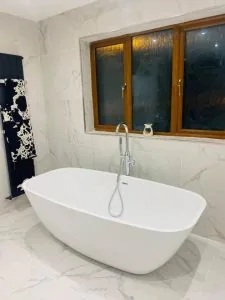
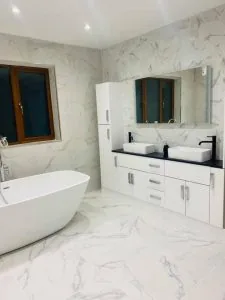
Bathroom underfloor heating
If you use your bathroom every day, underfloor heating is a small job with an outsized payoff. It is not particularly challenging to fit during a bathroom refit, and the result is a room that is always warm underfoot. As home renovations go, it is a sensation that is hard to beat.
Low flow systems
When refitting a bathroom, choose low flow fittings for the shower and toilet. A low flow system uses less water for the same result, which cuts both your water bill and the energy used to heat that water. As a first home improvement it starts paying for itself from day one.
Energy efficient appliances
When you move in, check every appliance the previous owners left behind. Old, worn out appliances quietly inflate your bills every month. Modern appliances are far more energy efficient than the generations before them, so whether it is the oven, the fridge or the kettle, an upgrade usually pays for itself over its lifetime.
Install a heat pump
If you want to go further than a boiler swap, a ground source or air source heat pump is the long term option. Heat pumps run on electricity, deliver several units of heat for every unit of power they use, and pair well with solar panels and good insulation. They cost more up front than a boiler, but as a long term investment in a home you plan to stay in, they are worth pricing up.
Insulation, insulation, insulation
Finally, if you want your first home improvements to work, look at insulation for the loft, walls and floors. Anything that keeps the heat in when winter comes and energy prices are high is your best friend, so it may be time to call the professionals.
Funding schemes are also available to help with the cost of insulating older properties, and insulation works hand in hand with double glazing: there is little point heating a well insulated home if the warmth escapes through single glazed windows.
Final thoughts on first home improvements
You have plenty of options for making a new house your own, from quick wins like LED bulbs to bigger projects like heat pumps and new bathrooms. Work out which improvements matter most for your property, start with the building fabric, and the rest falls into place.
Be honest about what you can and cannot do yourself. Professional installers will handle insulation, bathroom replacement and underfloor heating properly, without the damage a misguided DIY attempt can cause. And when it is time to replace your windows and doors, you can turn to us: our guide on how to qualify for free windows and doors explains exactly how the funding works.
The Help 2 Buy Windows grant has nothing to do with the UK government; it is funded 100% by Help 2 Buy Windows through the sale of leads to our clients.
Frequently asked questions
Which home improvements should I do first when buying a house?
Start with the fabric of the building: double glazed windows and doors, insulation and the boiler or heating system. These cut your running costs from day one and protect everything else you do. Cosmetic upgrades such as kitchens and bathrooms can follow once the essentials are sorted.
Is there funding for new windows and doors?
Yes. Homeowners with windows five years old or older can check their eligibility for the Help 2 Buy Windows grant in under 60 seconds using our funding checker. The Help 2 Buy Windows grant has nothing to do with the UK government; it is funded 100% by Help 2 Buy Windows through the sale of leads to our clients.
Do home improvements add value to a property?
Many do. Energy efficiency upgrades such as double glazing and insulation improve a home's EPC rating and kerb appeal, while updated kitchens and bathrooms are consistently among the improvements buyers pay attention to. A local estate agent can tell you which upgrades add the most value in your area.
Do I need professionals for these improvements?
For anything structural, electrical, gas related or glazing related, yes. Window and door installation, boiler replacement, heat pumps and underfloor heating all need qualified installers, and DIY attempts can invalidate warranties and cause damage. Smaller jobs such as swapping to LED bulbs are safe to do yourself.